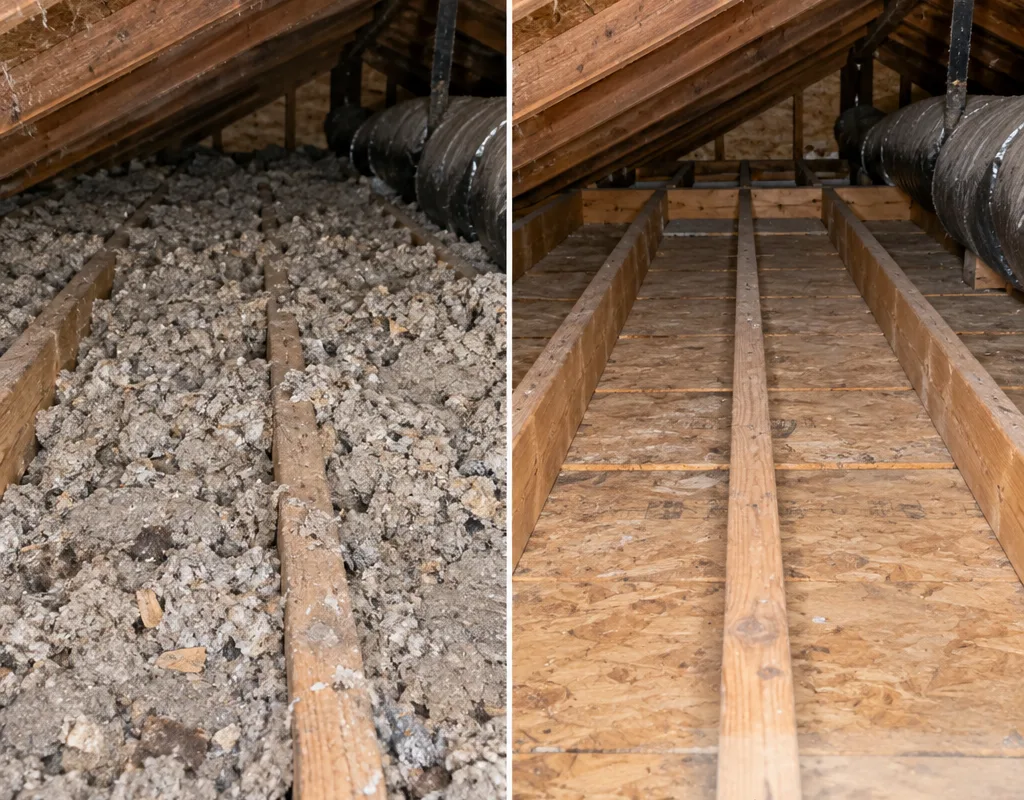
Rodent contamination
Droppings, urine, nesting material, and chewed insulation can affect air quality and create persistent odors. Removal clears the impacted material so the space can be properly cleaned.
Serving Sacramento, California & surrounding areas
Mon–Fri 8am–6pm Sat 9am–2pm
Get old, contaminated, or damaged insulation out of your attic or crawl space with controlled removal, thorough cleanup, and straightforward next steps for your home.
If you are searching for insulation removal Sacramento homeowners can rely on, you are probably dealing with one of the common triggers: rodent activity, musty odors after a roof leak, insulation that has settled and stopped performing, or a remodel that exposed a mess in the attic.
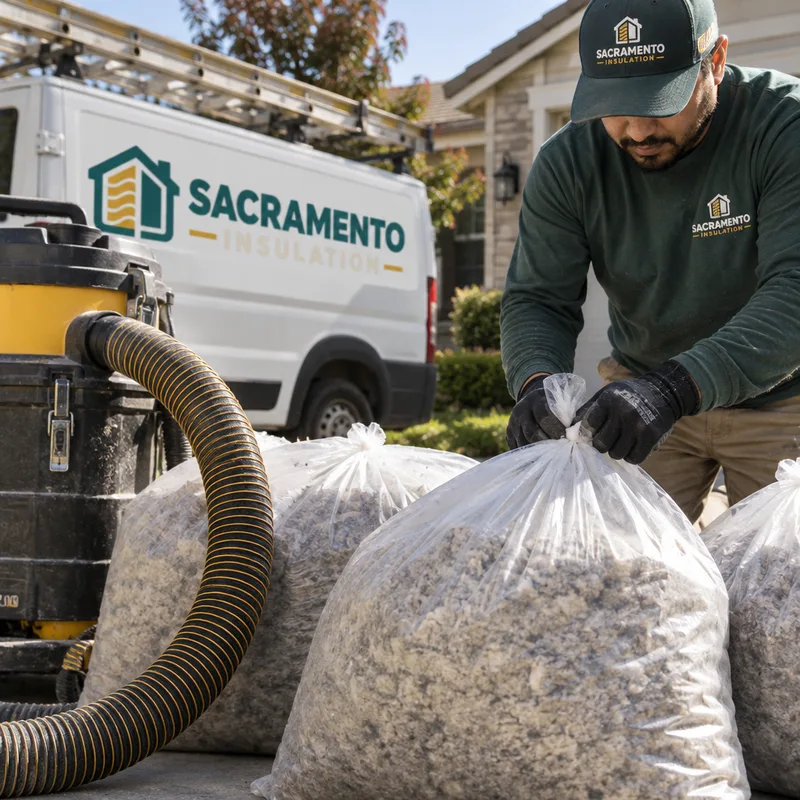
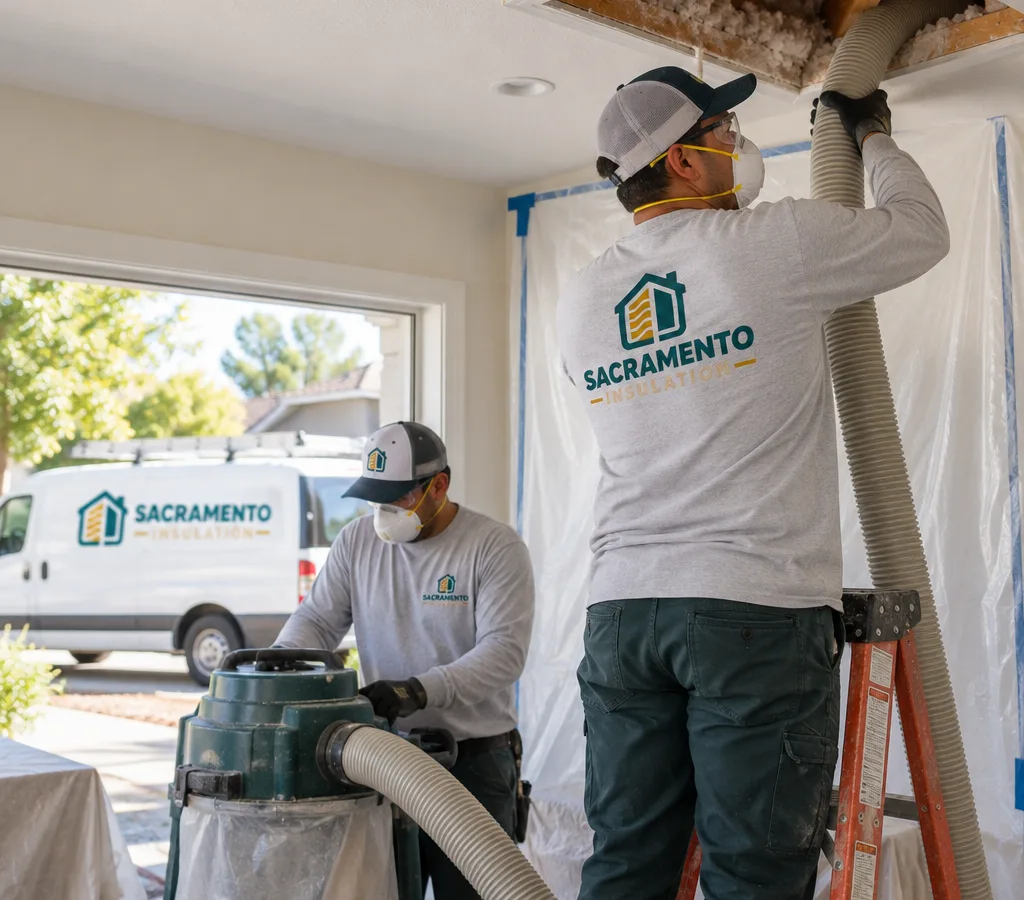
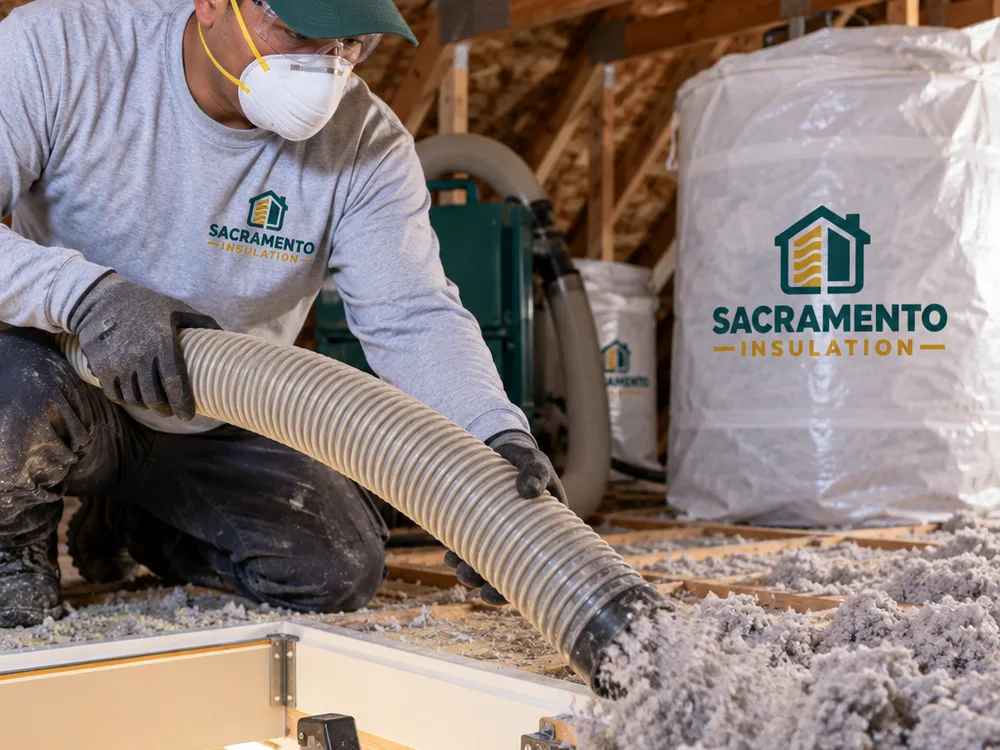
Removal is not a simple sweep-and-bag job. Fiberglass, cellulose, and mixed debris can carry fine dust, droppings, and deteriorated material that spreads through the house if it is disturbed the wrong way. Our crew uses controlled methods—containment, negative-air-style capture, and commercial vacuums—to get the material out without turning your attic access into a dust chute.
Sacramento Insulation provides insulation removal for attics and crawl spaces across Sacramento, including older housing pockets in Midtown and East Sacramento where tight attic access and layered insulation are common, and neighborhoods like Land Park where large rooflines can mean more square footage to clear. When you want the work done cleanly, you want a written scope and a clear plan for debris handling before anything starts.
You will be working with Sacramento's insulation specialists for the removal scope itself, and we will tell you what we find once the old material is out—wet decking, stained joists, pest pathways, or blocked vents—so you can decide what to do next.
A proper insulation removal job is equal parts extraction and site control. For most Sacramento homes, the goal is to remove the insulation while keeping the rest of the house clean and leaving the attic or crawl space ready for whatever comes next.
Typical insulation removal scope:
When removal is driven by contamination—rodents or moisture—we will discuss whether localized removal is truly enough. In many cases, a patch approach leaves the same odor source and dust behind. A full pull can be the cleanest way to reset the space and stop the issue from lingering.
Droppings, urine, nesting material, and chewed insulation can affect air quality and create persistent odors. Removal clears the impacted material so the space can be properly cleaned.
After roof leaks, bathroom fan exhaust issues, or condensation, insulation can mat down and hold moisture. Wet insulation stops insulating and can contribute to musty smells.
Kitchen and bath venting changes, recessed lighting updates, or re-ducting often require pulling old material to access framing and penetrations safely.
Loose-fill can drift and settle over time, especially near eaves and around service paths. Removal is sometimes the first step before re-leveling or upgrading insulation.
Old insulation around heat-producing fixtures or questionable wiring needs a careful approach. Pulling back insulation can be part of making the space safer to service.
Step 1 of 4
We look at access points, insulation type, depth, and any signs of moisture or pests. You get a clear scope for what gets removed, how we will protect the living space, and how debris will be handled.
Step 2 of 4
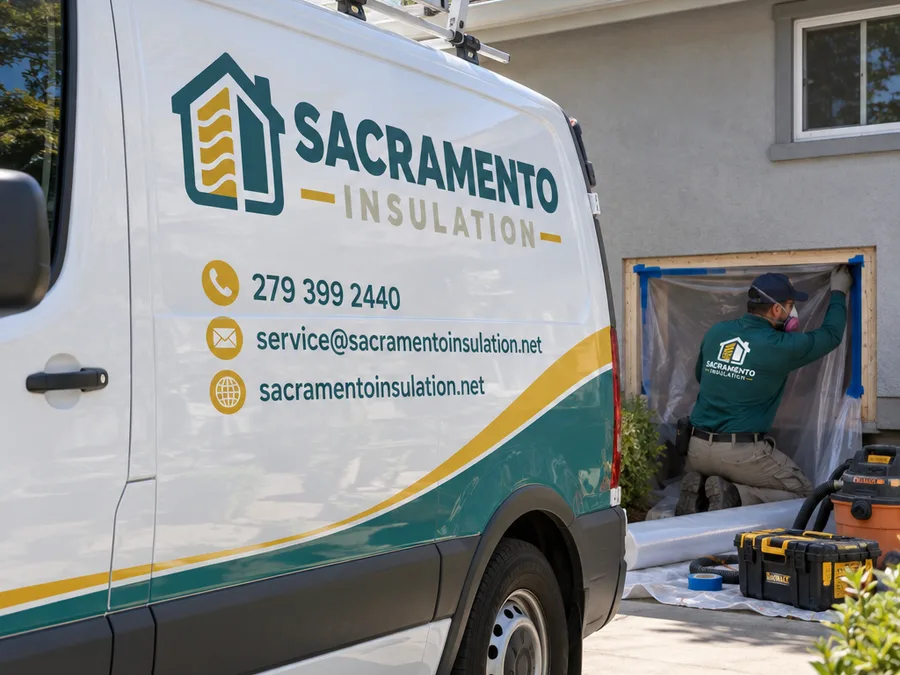
We cover floors, stage equipment, and control the path from the attic or crawl space to the exterior. In tight-access homes, we plan the cleanest extraction route before we start pulling material.
Step 3 of 4
Loose-fill is typically vacuumed out with commercial equipment. Batts are pulled, bagged, and removed by hand. We work methodically around wiring, ductwork, and framing to avoid damage.
Step 4 of 4
We clean the work area and do a walkthrough of what was uncovered: stained sheathing, disconnected ducts, blocked vents, or gaps at penetrations. If you are planning to reinsulate, the space is left ready for next steps.
Insulation removal in Sacramento typically ranges from about $600 to $2,500+, with small attic or crawl space cleanouts at the lower end and full attic removals—especially contaminated or hard-to-access spaces—at the higher end. A single-room or localized removal is often closer to $400 to $900.
Final pricing depends on square footage and depth, insulation type—loose-fill versus batts—contamination level, access such as tight hatches or steep attic pitches, and how much debris needs to be bagged and hauled. The exact cost is confirmed after an on-site look at the space and access.
If your attic smells musty, you have evidence of pests, or you are prepping for a new insulation install, start with a removal plan that prioritizes containment and a clean handoff.
Book Your Free InspectionTell us what you are seeing—odor, pests, moisture staining, or a remodel timeline—and we will confirm the scope, access plan, and cleanup approach for your Sacramento home.